Students from St John’s Catholic School and Sixth Form College in Bishop Auckland have been celebrating the success of an extraordinary chemistry research project that saw them contribute to the development of potential new treatments for tuberculosis (TB) alongside leading university scientists.
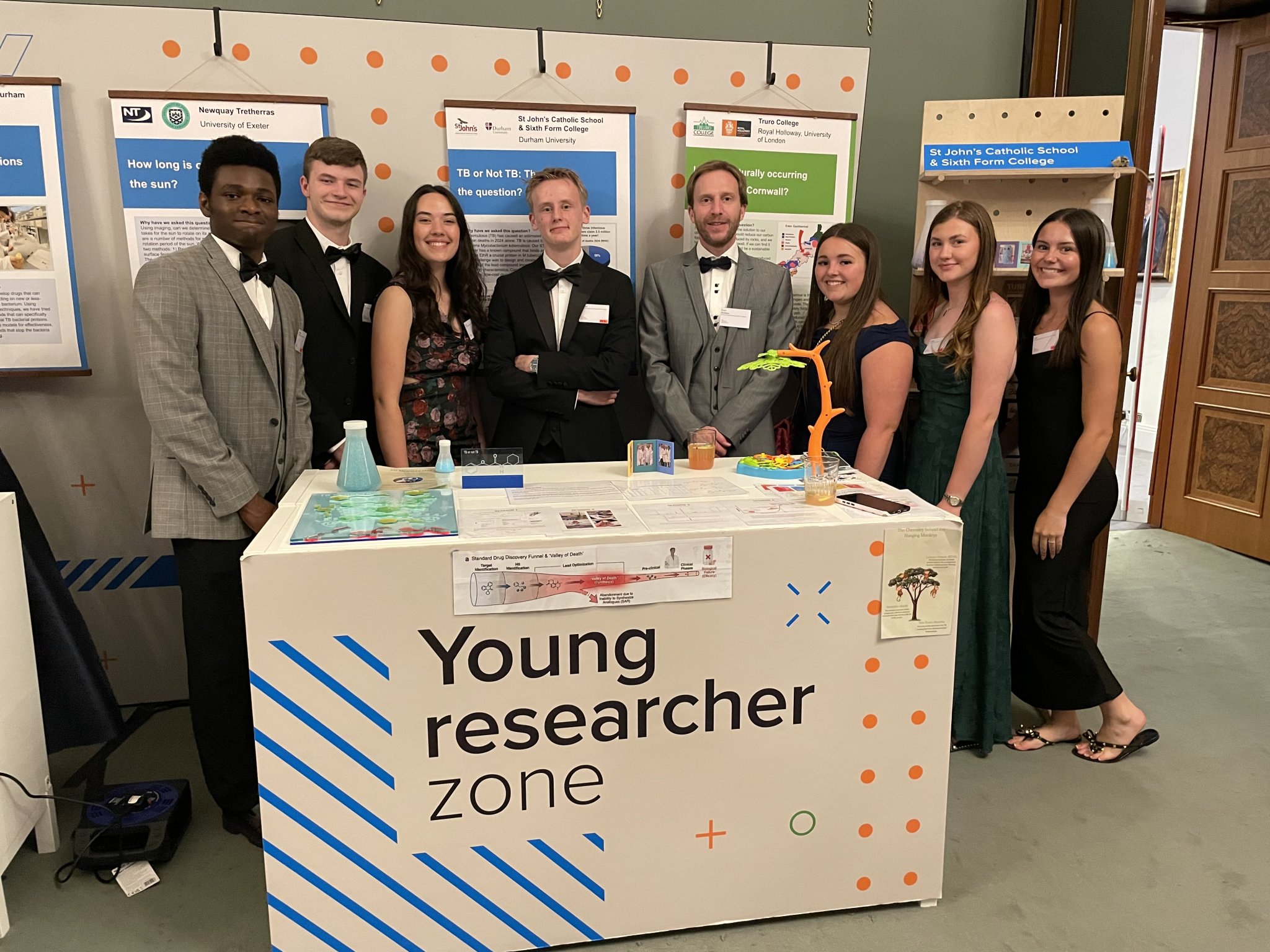
The Year 12 chemistry team – Lexi James, Daniel Dodd, Joe Meek, Donald Betiku, Lucy Oswin, Alicia Moore and Emilie Peart – recently travelled to London to showcase their research at a prestigious Royal Society event, marking the culmination of a year-long project that took them far beyond the A-Level curriculum.
Working with Leading Universities on Real-World Research
Supported by STEM partners from Durham University and Newcastle University, the students were challenged to take part in genuine scientific research focused on developing novel drugs to support the treatment of tuberculosis, one of the world's most significant infectious diseases.
Using advanced scientific techniques and university laboratory facilities, the team designed, created, purified and tested 14 new chemical compounds. The project provided a unique opportunity for students to experience research at an exceptionally high level, while developing practical laboratory skills and gaining insight into careers in science, healthcare and engineering.
A Breakthrough Success in Drug Development
The results of the students’ work exceeded expectations.
Several of the compounds developed during the project were found to increase the effectiveness of existing tuberculosis drug treatments by more than 100 times, representing a remarkable achievement for a group of sixth form students.
The success of the research has been so significant that university researchers are now progressing the compounds into the next stage of development, assessing their potential for future clinical use.
Head of Science, Mr Evan Mulligan, praised the students for their dedication and commitment throughout the project.
“This was a really high-level project that I don’t think has been done in any school in the country before, so it’s been a brilliant experience for the students.
Not only did they have to raise their game scientifically, but they’ve also gone on to do career talks and been exposed to world leaders in the field.
They’ve worked so hard, often after school hours, and it’s been impressive to see how they’ve risen to the challenge. It’s been so valuable for their CVs as they prepare for further and higher education.”
Showcasing Research at the Royal Society in London
The project, funded by The Royal Society, concluded with a showcase event in London where the students presented their findings in the Young Researchers Zone as part of the Royal Society’s Summer of Science programme.
Accompanied by Mr Mulligan and Assistant Head of Science Claire Little, the students had the opportunity to share their work with fellow researchers, educators and leading figures from the scientific community.
The event celebrated not only the students’ scientific achievements but also the impact that opportunities like this can have on inspiring the next generation of researchers and innovators.
Building Skills for Future Success
Throughout the project, students worked in state-of-the-art university laboratories and used sophisticated 3D modelling software to design potential drug compounds. Alongside developing their scientific knowledge, they strengthened their problem-solving, communication and teamwork skills.
For many participants, the experience has helped shape their future ambitions.
Daniel Dodd said:
“It’s been really exciting and interesting. I was worried it was above our level at first, but we grew in confidence as the project developed. Not only is it great to put on the CV but it’s a drug that might help people.”
Emilie Peart added:
“I’d never done anything like this before, and it was great to be able to work in the university labs. It’s amazing to have been part of something so big that could make a difference to people’s lives.”
Inspiring the Next Generation of Scientists at St John’s Sixth Form
The project highlights the exceptional opportunities available to students studying Science at St John’s Sixth Form in Bishop Auckland. Through strong partnerships with universities and industry experts, students are able to engage with cutting-edge research, gain invaluable hands-on experience and develop the confidence needed to succeed in higher education and future careers.
Following the remarkable success of this year’s project, the universities have already invited St John’s students back for a second round of research collaboration - opening the door to even more opportunities for aspiring scientists in the future.
For students looking for a sixth form that combines academic excellence with real-world experiences, St John’s Sixth Form continues to provide opportunities that truly make a difference.

